
I Saw My Father
I have spent the last four years of my life working on the protection of boys from sexual violence. I literally travelled across the world to learn from front line practitioners how to protect boys and transform their understanding of what it means to be a boy and a man.
From Bolivia to Cambodia, then from Namibia to France, I had the privilege to see how these amazing individuals engage with boys and support them in ways that not only protect them, but also liberate them from rigid ideas of masculinity.
In my travels, I could also see how that same rigid idea is engrained in boys’ minds from a very young age. I have seen how social workers, teachers, community educators, and others, had to come up with new ways and constantly be creative to reach out to boys and show them that an alternative existed. That boys could be vulnerable, that boys could ask for help, and that boys could care.
One thing that is shared across all countries is that masculinity means being strong. It means not showing weakness. It means handling things on your own and not asking for help. You are a boy, you must be strong. You are a boy, you must know how to protect yourself.
Nothing new about this, tale as old as time. But as feelings and acts of care are suppressed, relationships are weakened, and full communities suffer.
Show that nothing affects you, show that you do not care. You are not affected by what happens to you, you are carefree. Except there is no freedom there. You are letting them taking the care away from you, and you are letting the world also be deprived of all the care that you can give.
One of the many things I have learnt through these experiences, as easy as it might seem, is that boys seek out help, and they do show care, when they see other men doing it. Role models are critical. I have seen exceptional programs working precisely because of this.
Boys saw vulnerability and care in action through adult men from their communities, men that they respected, men that seemed free from other people’s judgement. Men that did not struggle to share their stories, men that showed that caring for others is a strength and something to be proud of.
As I learnt from others, I couldn’t help but wonder: how did I learn to care when, as a boy, nothing in society told me that I was supposed to?
I am still not a master at seeking help (I must admit), yet I never felt any tension around my ability to care for others. So what was it? What made me feel so comfortable with care? And more than that: what made it something that I would never want to have taken away from me?
I started to look back at my own boyhood to find that answer. Growing up in a small rural community of a border region, everyone was taught to be tough. Men and women. Everyone needs to handle things on their own, everyone needs to show strength even when everything around them seems to crumble down.
When it comes to boys and men, they do not only need to be strong. They need to be providers, yes, but also carefree. They need to be detached, at the very least. You can care for your family and community, you can do acts of care, but you do not show them. It goes without saying, but care and detachment cannot really co-exist in the same sentence, can they?
How do I affirm my role as a man if I show that I care about others? Yet, growing up, I saw my father letting ‘care’ be his defining trait.
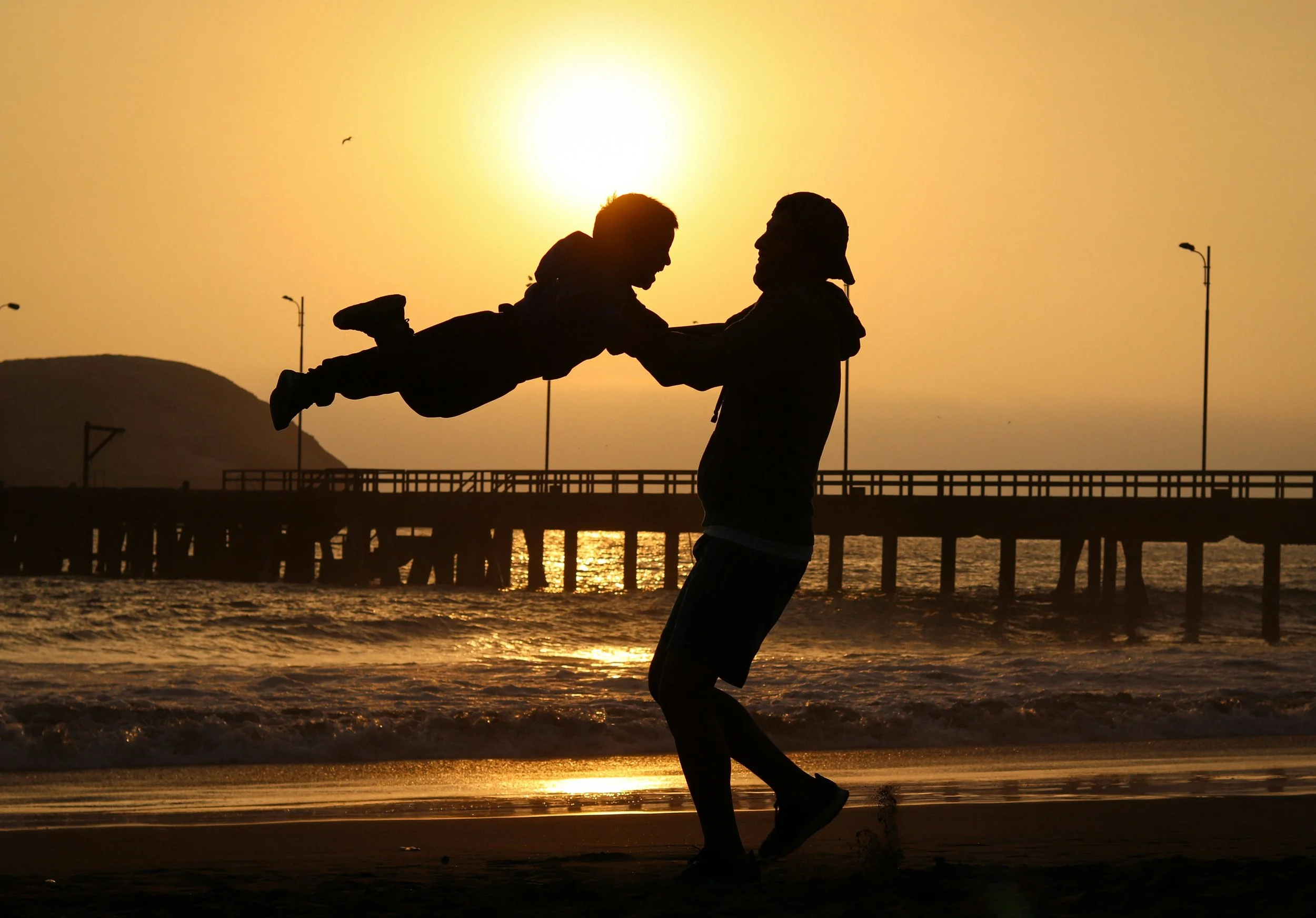
I saw my father standing up with no shame when other people would make a joke about him doing household chores. I saw my father sitting down at the table with my mother to discuss what was needed for the house, my school issues, and how to divide appointments with doctors and other professionals for the rest of my family. I saw them doing that together, as a team. I never had to wonder if I was, one day, going to be the one cleaning the house or making sure my kids did their homework.
My father liked soccer, any other sports, and all things ‘masculine’. I did not. My father never pushed me to do any of those things. When I tried soccer and did not like it, I remember him bringing for me a walk next to the field and just observe nature. We did not have a conversation, there was no issue.
My father cared about what I liked. Even when everything else in society, from school to advertisements, from media to peers, told me that, as a boy, I needed to like all of those things too. That was my first memory of liberation. I did not have to pretend to be anything else than myself, and that I was still cared for.
I saw my father caring for his disabled brother his whole life, and making sure he could have a dignified job and independent living. I saw my father showing up to all appointments with social workers, with employers and medical staff. I saw him following up on every action.
Over time, I watched my uncle slowly become integrated into the community. Through it all, my father cared deeply and consistently, never distracted by others’ comments or judgments.
When my maternal grandmother got sick, he had no hesitation in stepping in, in calling doctors, making appointments, driving around the region, and caring for me when my mom was busy with her. Once again, that was not a conversation, it’s just something that happened naturally, in team work. I saw my mother being able to rely on him, while facing the heartbreak of a loved one’s disease. I saw my father watching soccer on TV on Sundays with my grandma (yeah, she was a fan!), even when her memory was slowly fading away and as she started to forget the players’ names.
I believe that my parents did their small revolution there, in a small village in the middle of cornfields. They shared responsibilities and care for their loved ones as a team. My father stepped in, in all the things he thought he could be good at, where he could appropriately show up. No one taught him, but he taught me.
He knew what it meant to be raised by a careless father and I want to believe he did not want the same for me. I don’t know if that happened intentionally, but it happened, and I will be forever grateful.
As I continue to travel across countries and regions, as I witness the efforts of incredible humans in reaching out to boys, I know I was lucky to have my own authentic role model, right at home.
I want to believe that all the care that I put in my job, and all the care I am able to see others practice with boys, are just an extension of what I was able to receive as a young boy, even against all odds.
I learnt care not as a performance, but as a practice: in my father’s consistency, his presence at every appointment, and his refusal to be shaped by other people’s judgments.
Care was never explained to me, it was lived in front of me. And because of that, it became something I did not have to justify, simply something I learnt to carry forward.