
Living Within a Lie: Performing Masculinity Is Exhausting
Recently, one of our staff got a message from a 13-year-old at 1 a.m. on his birthday. He wrote: "I just spent the first 45 minutes of my birthday crying. I don't want to be seen like this. I feel like I would be laughed at just for expressing myself."
He trusted one adult enough to say this in the dark, when no one else could see. But the next morning? He'll put the sign back up. "I'm fine." "Nothing's wrong." "Best birthday ever." Because that's what you do when everyone around you is doing the same thing.
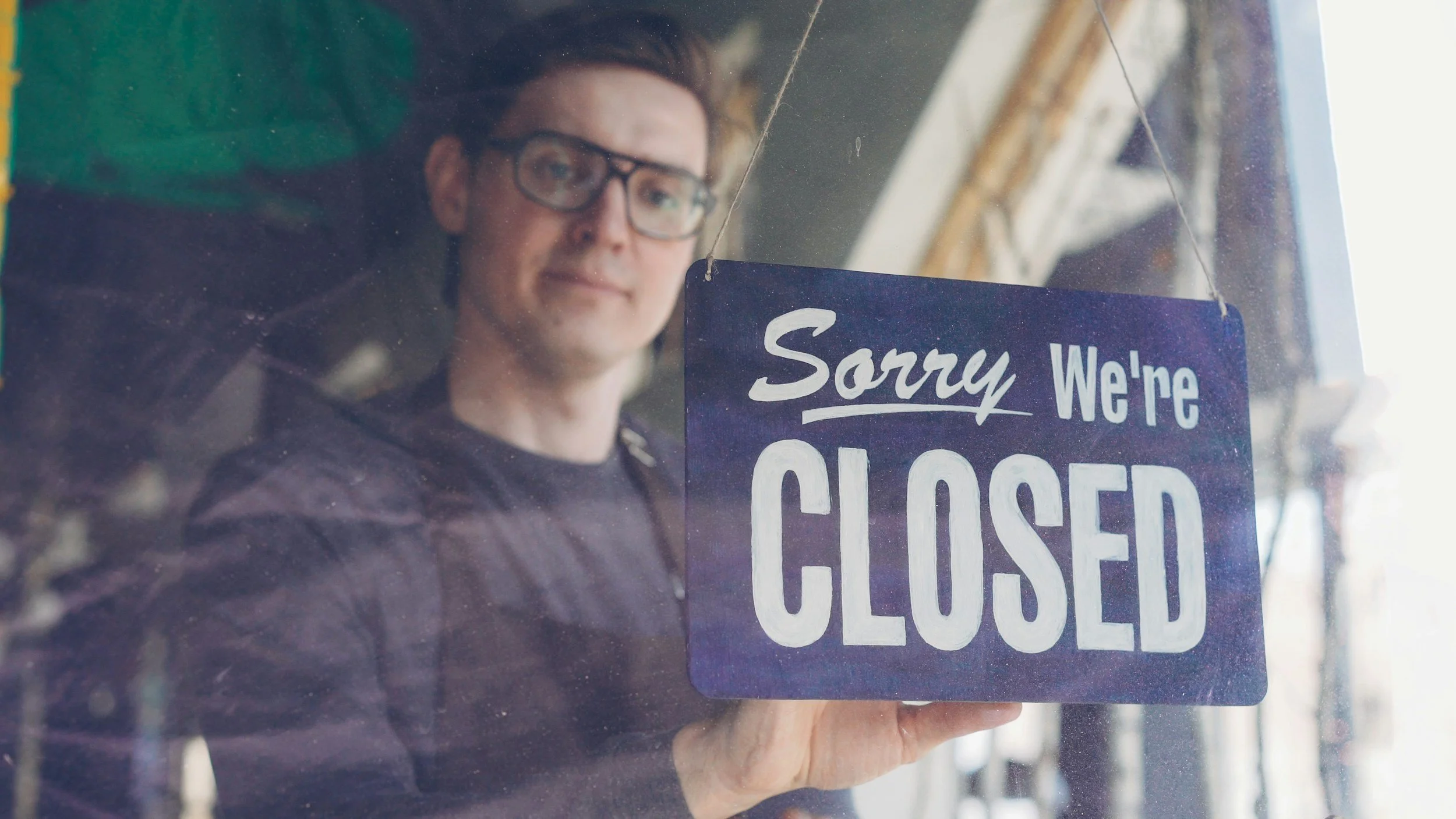
That's what keeping the sign in the window looks like.
Last week, Canada's Prime Minister Mark Carney stood at the World Economic Forum in Davos, Switzerland, and quoted a Czech dissident from the 1970s to talk about the future of global power. The essay was Václav Havel's "The Power of the Powerless," written in 1978 while Czechoslovakia was under communist rule.
As a Canadian who was born in Czechoslovakia, hearing Havel's words quoted on the world stage hit differently. And all I could think was: this applies to the masculinity work we do at Next Gen Men too.
Here's the story Havel told: Every morning, a greengrocer places a sign in their shop window that says "Workers of the world, unite!" They don't believe it. No one believes it. But they put it up anyway – to avoid trouble, to signal they're complying, to get along. And because every shopkeeper on every street does the same thing, the system keeps going. Not through violence alone, but through everyone's willingness to pretend.
Havel called this “living within a lie.”
The Signs Boys Put in Their Windows
The signs boys put up today look different, but the system is the same.
"I'm fine" – when they're not
"That's gay" – said about anything that feels too emotional or vulnerable
Laughing at jokes – that make them feel sick inside
Posting gym selfies – to prove they're strong enough
Staying quiet – when friends say something sexist
Ghosting people – who try to talk about real things
"I don't need help" – when they're drowning
Different signs. Same system. Same fear of what happens if you take them down.
I've done all of this. I spent years performing a version of masculinity that didn't fit because I thought that's what I was supposed to do. My sign said "I've got it all figured out." I kept it up through struggles with anxiety, through moments when I felt completely lost, through times when I desperately needed support but was too afraid to ask for it.
What changed wasn't the external pressure – it was realizing that the performance was costing me my mental health. People couldn't help me because I wouldn't let them see I needed help. The sign was protecting me from judgment, but it was also keeping me isolated.
I've spent 11 years working with boys and young men at Next Gen Men. I've heard thousands of conversations that start with some version of the same question: "What does it mean to be a man?" And what I've learned is that most of us are like that greengrocer. We're putting up signs we don't really believe in.
Not because we actually think this is how things should be, but because not doing it feels dangerous.
Why It's Getting Worse
And here's what makes this urgent: the signs are multiplying.
Boys used to get contradictory messages from a few sources – parents, teachers, maybe TV. Now it's TikTok, Instagram, YouTube, Discord, their therapists, their coaches, their teachers, their peers, and fifty different influencers all telling them different versions of what a man should be.
Andrew Tate and his followers tell them masculinity is dominance. Their teachers tell them masculinity is toxic. Their therapists tell them to be vulnerable. Their peers tell them vulnerability is weak.
The pressure to perform isn't just high. It's omnidirectional. The training data isn't just negative – it's chaotic. No wonder they're anxious.
Living Within the Lie
Havel wrote that communist power didn't just come from forcing people to believe propaganda. It came from getting people to act as if they believed it. The greengrocer's sign wasn't there to convince anyone that workers should unite – it was there to show they were playing along.
For us as men, 'living within the lie' looks like performing a version of masculinity we don't actually buy into. Some of us feel the mismatch every day. Others have worn the mask so long it feels like our real face.
It's pretending we don't care about things that matter to us. Acting like mental health struggles don't exist. Agreeing with attitudes about women or queer people that don't sit right. Suppressing who we actually are to fit the script.
When Carney talked about middle powers ‘keeping the sign in the window,’ he meant countries invoking a rules-based order they know doesn't function anymore. For us, it means invoking a version of manhood that doesn't work for us – but doing it anyway because the alternative feels worse.
Here's the thing that gives me hope, though: Havel argued that when even one person stops performing – when the greengrocer takes down his sign – the illusion starts to crack. That's why it matters when one of us in a friend group says, "Actually, that's not cool." Or when one guy at work admits he's struggling.
The system only has power because we're all pretending together.
We're All Complicit. We All Have Power.
Patriarchy – the system that tells us we need to be tough, dominant, and emotionally shut down – isn't some villain we can point to and defeat. It's woven into how we were all raised. We've absorbed it. We've passed it on, often without meaning to. I’ve caught myself doing it – staying silent when someone made a joke I knew was harmful, rewarding boys for “toughing it out” instead of asking if they’re okay.
As bell hooks wrote, patriarchy's first act of violence isn't toward women. It's toward boys themselves. We learn to cut ourselves off from our own feelings, to police ourselves and each other, before we ever learn to dominate women. That's the foundation everything else is built on.
This isn't about calling us toxic. It's recognizing that we're navigating a system that hurts us too. All of us, to different degrees, have kept those signs in our windows.
If we're all participating in keeping this going, that means we all have the power to stop.
What "Living in Truth" Looks Like
When Carney applied Havel's framework to global politics, he laid out three principles for middle powers. I think they work just as well for us:
Name reality
Stop pretending we believe the ‘masculine script’ when we don't. Call out what we actually experience: loneliness, pressure, fear, pain.
In practice, this looks like: Texting back "Honestly, I've been struggling with this too" instead of "Yeah man, all good." Saying to a friend, "I feel way more anxious than I let on" instead of defaulting to "I'm fine."
One of the boys in our community told us he realized that when he talked about his feelings with his friends, nothing bad happened. In fact, his friends opened up too. But someone had to go first. Someone had to stop pretending.
Act consistently
Don't criticize rigid masculinity in some contexts while enforcing it in others. Apply the same standards to ourselves that we want for other people. If we say mental health matters, actually talk about our own struggles. If we say we value kindness, don't mock it when we see it.
In practice, this looks like: When someone in the group chat opens up, don't leave them hanging. Even just "Thanks for sharing that" changes everything. Not piling on when vulnerability shows up. Sending that message later that says, "I feel that way too."
This is where the real work happens – in the small moments when we have a choice to laugh along or speak up, to perform or be real.
Build what we claim to believe in
Don't wait for "toxic masculinity" to magically disappear or for someone else to create the spaces we need. Create them ourselves. Be the version of masculinity we wish we'd seen growing up.
In practice, this looks like: Starting a weekly check-in with a friend. Just "How are you actually doing?" No performance required. Turning a casual hangout into a space where you actually ask real questions. Creating one conversation where the signs can come down.
For us at Next Gen Men, this looks like Discord servers where boys can be vulnerable. Conversation card decks that give people language for their emotions. Training for the adults in boys' lives so they know how to respond when a kid opens up.
We're not waiting for permission – we're building what we believe should exist.
The System Is More Fragile Than It Looks
Here's what Havel understood that gives me hope: The system's power comes from everyone's willingness to perform as if it's real. Which means its fragility comes from the same source.
When we stop performing – when we refuse to mock sensitivity, admit we're struggling, stand up for people who are targeted – the whole thing starts to fall apart.
This is why we focus so much on meeting boys where they are. Not lecturing them about what they should think, but creating spaces where they can stop performing for a minute and actually figure out what they do think. The work isn't to fix anyone. It's to give us all permission to stop pretending.
And it works. I've seen guys who were convinced they needed to be cold and dominant discover that their friends actually liked them better when they were real. I've watched young men who thought asking for help was weakness realize it takes more courage to be vulnerable than to fake strength.
I've experienced it myself – the relief of finally putting down the performance and just being honest about who I am and what I'm struggling with.
Your Invitation
Look at the signs you've been keeping in your window. The ones that say you're fine when you're not. The ones that say you don't need anyone. The ones that say real men don't struggle, don't cry, don't ask for help.
Pick one that doesn't fit anymore.
And this week, just for one conversation, leave it down. See what happens when you show up as yourself instead of the performance.
Text that friend: "Actually, I haven't been doing great." Admit in that meeting: "I don't know the answer to this." Tell your son: "I'm struggling with this too."
The greengrocer's power wasn't in his compliance. It was in his potential refusal.
And so is yours.
That's how systems fall apart. One real conversation at a time.