
"I've been both of these characters": Alick Mac on masculinity, friendship, and his song "Phone Tag"
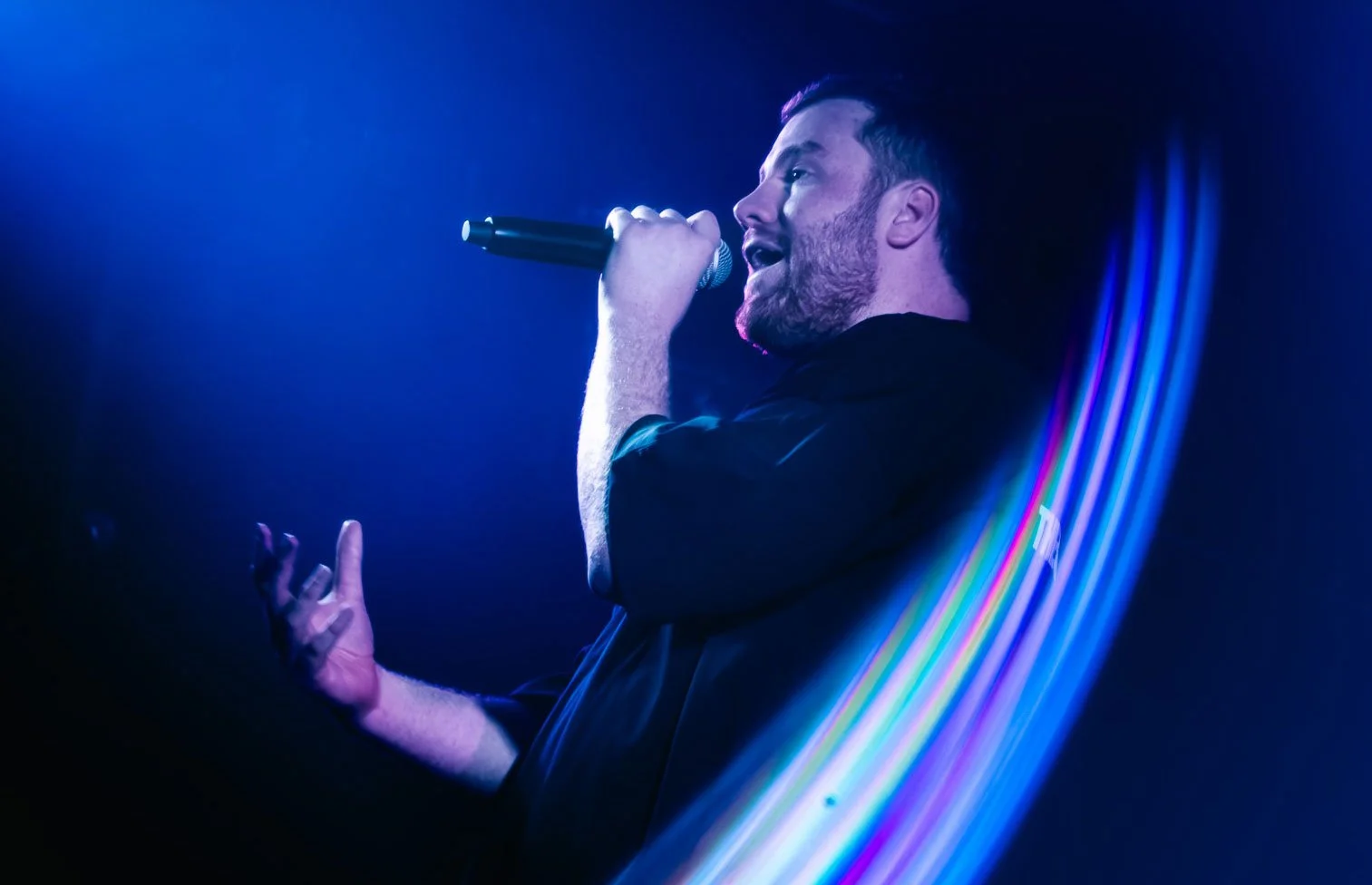
Photo Credit: Esther Cariaga
Alick Mac is a hip-hop artist who makes music about how hard it can be for men to open up. His music video "Phone Tag" follows a text exchange between two young men who keep trying to say something real, then deleting it. This fall he brings his one-man show "Boys' Club" to Fringe festivals in Nanaimo, Edmonton, and Vancouver.
We asked him about the story behind the video, what shaped it, and what he hopes people take from it.
1. For folks who haven’t seen it yet, how would you briefly describe “Phone Tag” – what’s the story you’re telling, and what drew you to it?
Alick: Phone Tag is a music video that follows a text exchange between two young men. You hear what these men say to each other, but also what they don’t say. They attempt to open up about their respective struggles before walking back (or deleting) their words, citing fears of being perceived as “weak” or “corny”.
Hip-hop has traditionally focused on storytelling, and I felt particularly inspired by Nas’ track “Rewind,” which sees Nas rap a story in reverse. I wanted to make a storytelling track and put my own unique spin on it, which is where the texting idea came in. I didn’t have the subject matter for the track down until I started working on my one-person show, “Boys’ Club”. I felt that the “texting then deleting” pattern would illustrate how men both desire and fear intimacy. Both characters make attempts to reach out and connect, but they have been conditioned to avoid vulnerability.
2. In your mind, what does this video say about how boys and men are taught to handle (or avoid) their feelings and relationships?
Alick: The devastating outcome of the characters in this story speaks to the extent to which men are socialized to avoid opening up and being vulnerable. As men, we have been conditioned to suppress our emotions, which makes intimacy incredibly challenging. There is a lot of love and respect shared between these two men, but their individual conceptions of masculinity limit their connection. This video is meant to demonstrate how the restrictive nature of traditional masculinity diminishes the benefits of that community and friendship.
“There is a lot of love and respect shared between these two men, but their individual conceptions of masculinity limit their connection.”
3. Was there a specific moment, relationship, or personal experience that shaped how you think about masculinity in this piece?
Alick: I wouldn’t say there was a specific moment, but rather, there have been patterns in my life that have shaped how masculinity is represented in this piece. In recent years, I’ve noticed the extent to which I seek to minimize my own emotions. I’m incredibly careful with my phrasing, as there are certain words that I associate with weakness. It was only when I started examining my relationship with masculinity that I began to realize how much my communication was shaped by a desire to be seen as a “real man”. When it came time to write “Phone Tag”, the words flowed out of me because I’ve been both of these characters.
Liz Plank’s wonderful book “For the Love of Men” was also foundational to the creation of this piece. The book features a chapter entitled “Bromance”, in which Plank explores male friendship and reflects on the dynamics that are present in “Phone Tag.”

A nonfiction investigation into masculinity, For The Love of Men provides actionable steps for how to be a man in the modern world, while also exploring how being a man in the world has evolved.
4. You’ve also got your one–man show Boys’ Club coming to Vancouver Fringe. How does Boys’ Club connect to the themes in “Phone Tag” around belonging, pressure, and what it costs to “be one of the guys”?
Alick: I believe “Phone Tag” encapsulates the story I am looking to tell with “Boys’ Club”, a one-man show which chronicles my journey with masculinity through songs, anecdotes and reflections. One of the show's core ideas is that the pressure to abide by the “rules” of traditional masculinity will lead to acts of self-betrayal. I’ve laughed at jokes that went against my principles, and I’ve dismissed the feelings of men I care about because their emotional expression made me uncomfortable. The men in “Phone Tag” care about each other, but they are unable to honour their mutual affection or speak from their hearts. My aim with “Boys’ Club” and “Phone Tag” is to demonstrate how society conditions men to ignore our instincts and feelings, the things that make us human, and to illustrate that there is a different path forward.
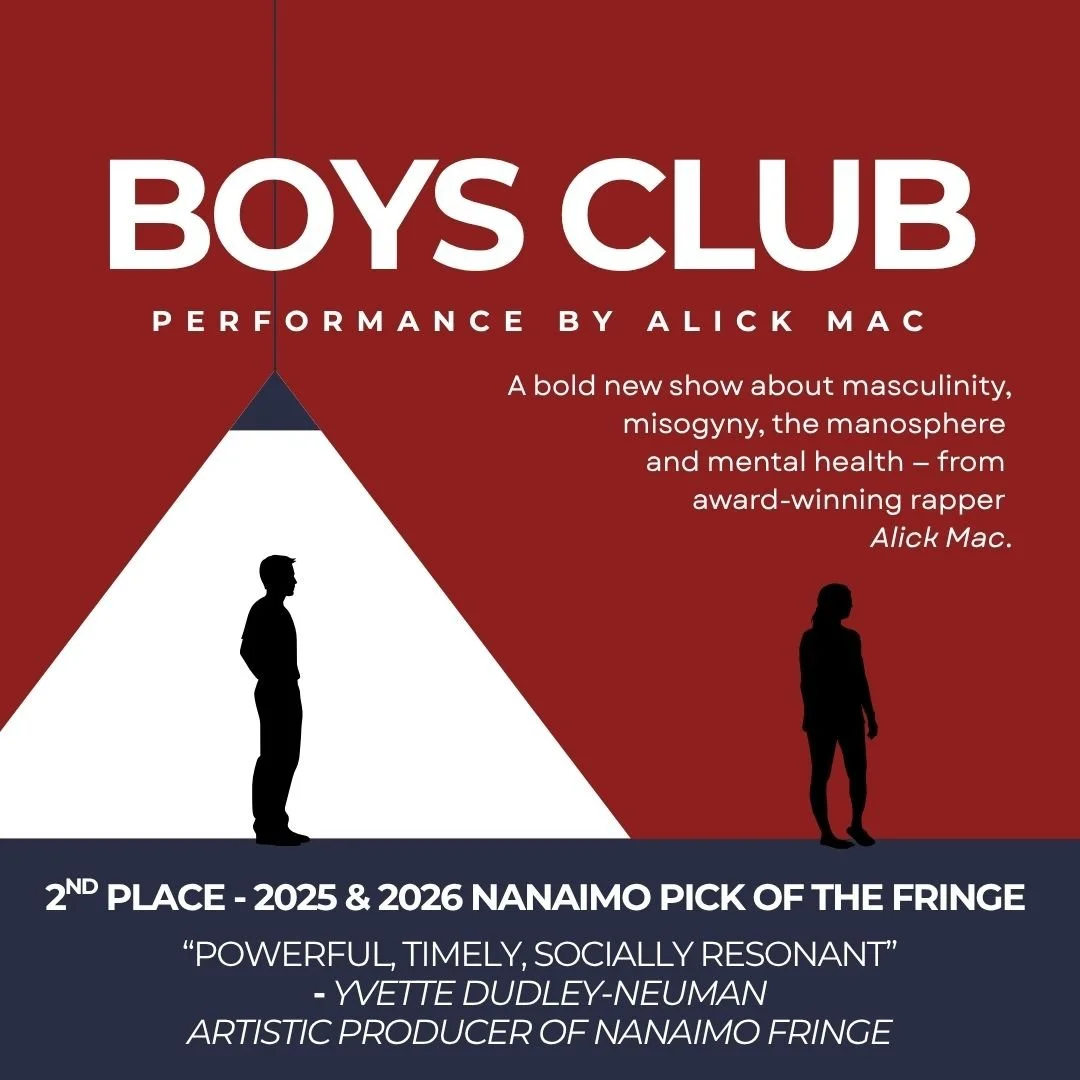
Image of the Boys Club poster, with a silhouette of a man under a lamp light looking at the silhouette of a woman at the edge of the image.
5. If a young man watches “Phone Tag” or comes to Boys’ Club and recognizes himself, what do you hope he does next in his own life or relationships?
Alick: My goal with “Phone Tag” and “Boys’ Club” is to create conversation and inspire reflection in viewers/listeners. I am aware that the men engaging with my work will each have their own unique circumstances and attitudes towards masculinity. There will be varying degrees of receptiveness to my messages. Still, I hope that young men can engage in some level of self-examination after watching my show or video. Even something as simple as a viewer thinking “huh, I’ve never told my friend I’m proud of them before” would be a huge win in my book. As men, we have learned to think about our gender in very limiting and rigid ways, which makes changing our perspectives and behaviours a slow and difficult process. I hope that my work can help men regardless of where they are on their journey.
6. There’s a lot of noise online about “being a real man” right now. Where do you see your work sitting in that conversation?
Alick: I hope that my work can reframe what it means to be a “strong man”. This strength shouldn’t be measured by aggression or dominance, but rather the bravery to sit with discomfort, to allow yourself to be seen in times of weakness. In one of my earliest songs, I rap the lyrics “Hard for us to cry/when it’s Easier to Shout”. I’ve found that getting angry and raising my voice is much more natural than calmly sharing with someone that my feelings have been hurt. I hope that my work positions softness and vulnerability as admirable and valuable traits in men.
7. What does a healthier version of masculinity look like to you – in everyday, ordinary moments – and how do you try to model that in your art and your life?
Alick: To me, healthy masculinity looks like being honest and allowing yourself to be seen as vulnerable. I feel that men receive a lot of messaging around how they need to show up in the world. Whether it’s trying to get hired, find a partner, or create an online presence, there is a lot of advice aimed at men which centers around posturing and presenting as infallible. I believe admitting your faults, sharing your insecurities and honouring your humanity is a far healthier and more sustainable approach to showing up as a man in the world.
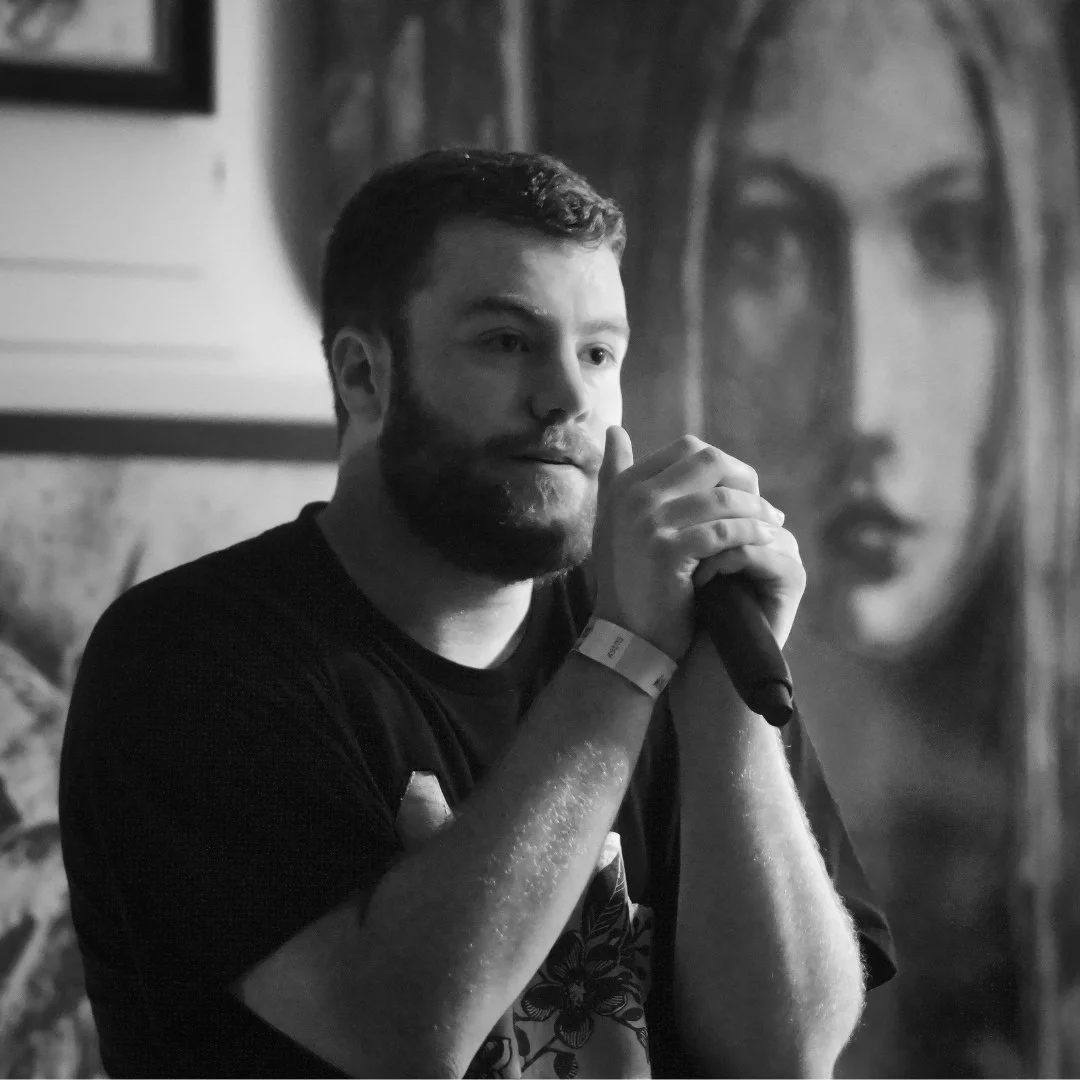
Alick Performing Boys Club | Photo Credit: Alison Fleming
8. For parents, educators, or youth workers who share this video or your show with boys and young men, how would you love to see them use it? Any questions or conversations you hope it sparks?
Alick: I think the moments when the men “delete” their texts could be used to explore a group's attitudes around masculinity. For example, when one of the men deletes a text in which he claims he “hasn’t left his bed in a week”, it could be interesting for young men or boys to consider why the text was deleted. What outcome is the character afraid of if he were to share this information? Is he worried his friend will see him as weak or dramatic? Is he worried he won’t understand? It could also be worthwhile to ask the group if this is something they would disclose or withhold, or to consider if there are other men they feel comfortable being vulnerable with.
9. Finally, where can people follow your work and support what you’re doing (music, theatre, upcoming projects)?
Alick: You can follow me on Instagram (@alickmac), Facebook (Alick Mac) or TikTok (@alickmacmusic). My music is available under Alick Mac on all streaming platforms. I’ll be performing my one-man show “Boys’ Club” at the Nanaimo and Edmonton Fringe Festivals in August before heading to the Vancouver Fringe Festival in September. My 6 performances of Boys' Club will take place at Arts Umbrella (Scott Studio) between September 10-19.

Photo Credit: Jorina Lee